
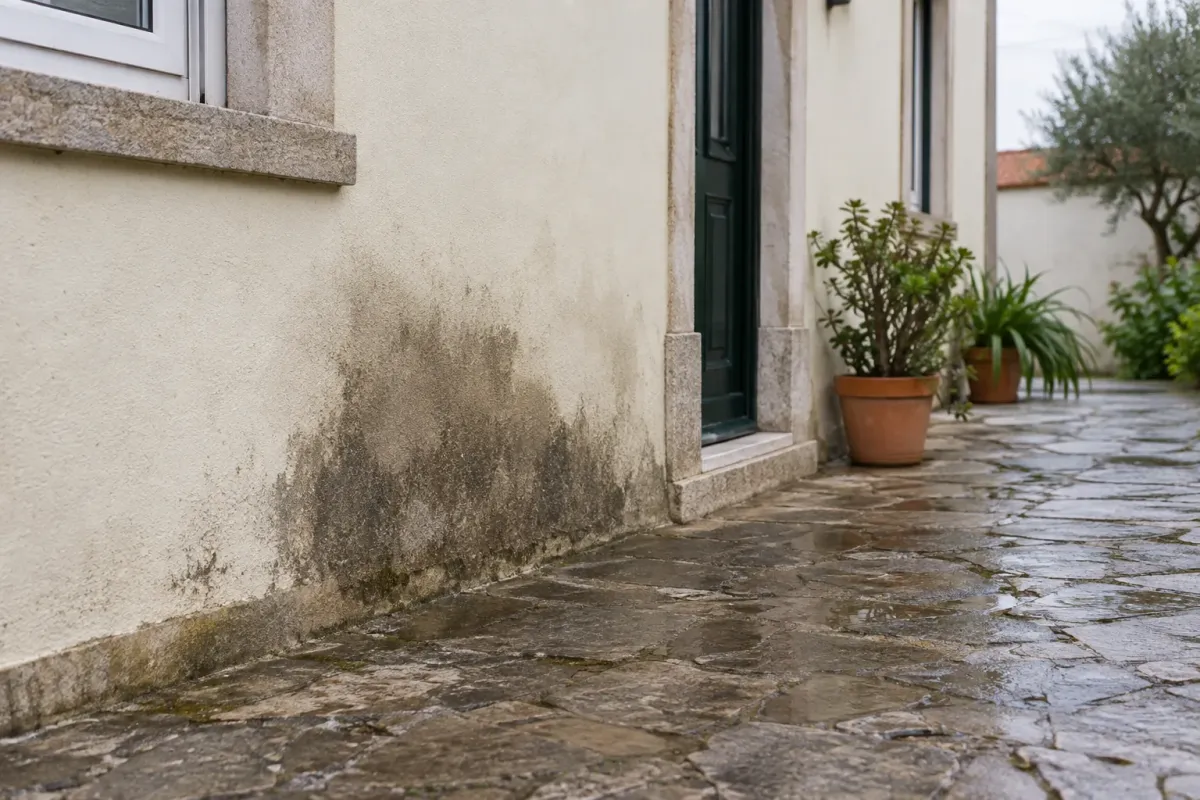
Describe the pattern before choosing a product
A persistent stain near ground level tells a different story from a mark appearing beneath a window after rain. Note its location, approximate height and the circumstances in which you observe it. If there is a corresponding mark inside the same wall, include that information in your enquiry.
The history matters too: has a gutter been repaired, a window replaced or a new coating applied? Separate what you know from what you suspect. A quotation based on an assumed cause may omit the work actually required.
Examine marks where the wall meets the ground
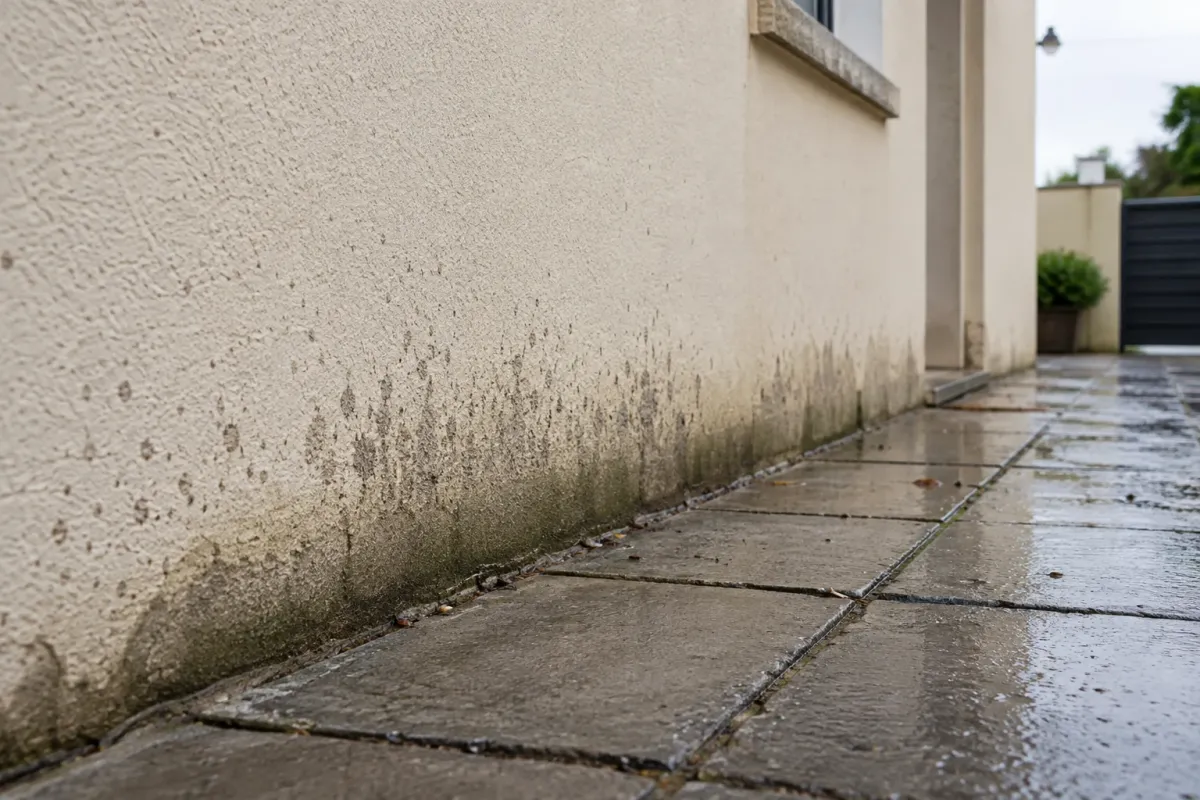
Dark marks are concentrated at the base of the wall beside damp paving. This junction calls for an assessment of water movement and surface condition before painting, without assigning a cause from the stain’s appearance alone.
How to approach this situation
- Record the circumstances and photograph both the indoor and outdoor areas, without identifying a cause from colour alone.
- Have the relevant building details checked, including junctions and water drainage, by an appropriate professional.
- Specify painting after the identified cause has been addressed and the surface condition checked against the chosen system’s requirements.
What determines the decision
A finish should not conceal continuing water ingress. The painting schedule depends on the preceding remedial work.
What to check at the end
Keep a record of the correction and monitor the area during further rain. The immediate disappearance of a stain is not sufficient evidence that the issue is resolved.
Rising damp has its own treatment options
Sika, for example, describes an injectable barrier intended for rising damp in particular types of masonry. This illustrates the difference between addressing a source of moisture and applying a finishing paint. It does not mean that this treatment suits every wall. Sika — SikaMur InjectoCream-100, Portuguese documentation.
Ask the professional to identify the purpose of each proposed stage. “Waterproofing” can be too broad a description without the location, system and problem it aims to address. Also ask how substrate condition will be checked before applying a covering.
What to record without disturbing the wall
- Dated photographs with similar framing.
- Any observed connection with rain, room use or periods when the house is empty.
- Loose paint, whitish deposits or streaks.
- Nearby pipes, openings, roof details or ground contact.
- Earlier repairs and available product documentation.
You do not need to wash or cover the stain before the visit. Keeping a record of the observed condition helps establish the sequence of events. Photograph hard-to-reach areas from ground level and leave close inspection to someone with suitable access equipment.
Avoid a quotation that changes appearance only
Ask for assessment, correction of an identified cause, preparation and finishing to be separated. If the contractor only carries out painting, establish who must deal with the preliminary problem and when painting may start. Everyone should understand those boundaries.
Ask what happens if the stain returns before work begins or preparation reveals a larger affected area. Agreeing the decision process is more useful than adding a general durability promise to the quotation. For a house in the Aveiro region, include the location and access arrangements in your first enquiry.
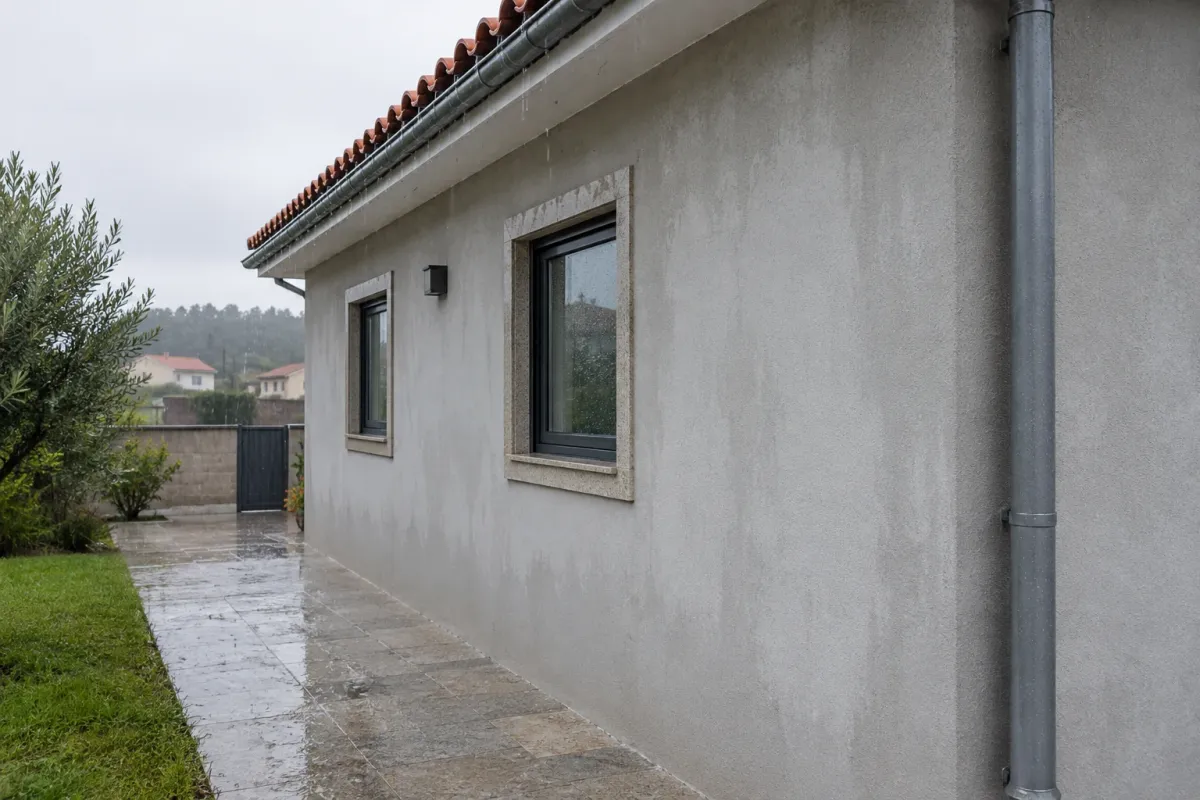
What if the choice is painting or capoto?
External wall insulation serves a thermal purpose and is not an automatic answer to every damp problem. First clarify the observed signs, then compare interventions with defined objectives. The facade painting service page explains what needs assessment before preparing a proposal.
Editorial information to help prepare your decision. The cited sources support technical statements; examples and checklists provide general guidance. The proposed solution and work are confirmed during the building assessment.
Exterior painting · Facade inspection and maintenance: a homeowner’s guide
What would you like to renew in your home?
Provide the location and describe the problem. An overall view and a detail photograph help prepare the first conversation.
Request a facade assessment ↗Aveiro · Ílhavo · Vagos · Gafanha da Nazaré. View service areas and assessment arrangements.